
SKF Bearing Original or Fake?
How to Verify Genuine SKF Bearings and Avoid Counterfeit Products
Industrial bearings are critical rotating components that directly affect equipment reliability, operational safety, energy efficiency, and total lifecycle cost. In demanding sectors such as steel manufacturing, mining, oil & gas, power generation, heavy machinery, and process industries, a single bearing failure can cause unplanned shutdowns, secondary equipment damage, and severe financial losses.
Because of the global spread of counterfeit products, SKF bearing authenticity can no longer be assumed. Counterfeit SKF bearings often appear visually identical to genuine OEM products, making simple visual inspection unreliable and risky.
To ensure operational integrity, authenticity must be verified through structured, traceable, and auditable procedures conducted within the official OEM supply chain.
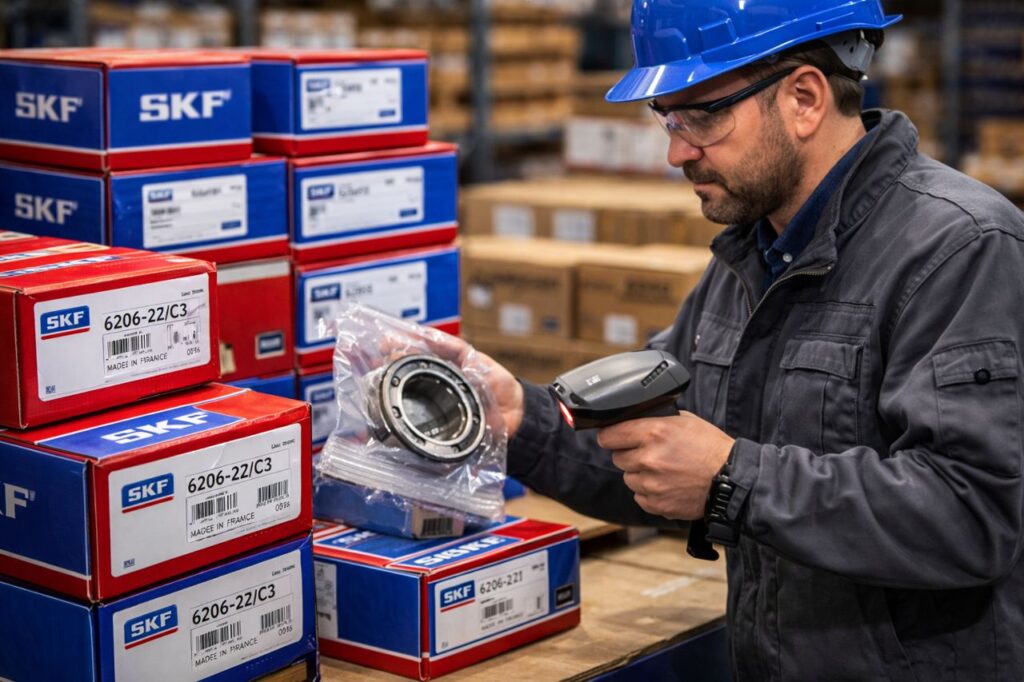
Why Verifying Original SKF Bearings Is Critical
SKF bearings are engineered to strict metallurgical, dimensional, and performance standards. Counterfeit alternatives typically lack:
controlled steel composition
precision machining tolerances
proper heat-treatment processes
OEM-approved quality assurance systems
As a result, counterfeit SKF bearings frequently fail under real operating conditions, even if they initially appear acceptable.
Why Visual Inspection Alone Is Not Enough
Visual checks alone cannot reliably distinguish between an original SKF bearing and a counterfeit product. Modern counterfeit operations can replicate:
logos and markings
packaging artwork
label formats
color schemes
True SKF bearing verification requires cross-checking physical components, documentation, and traceability data against OEM reference systems.
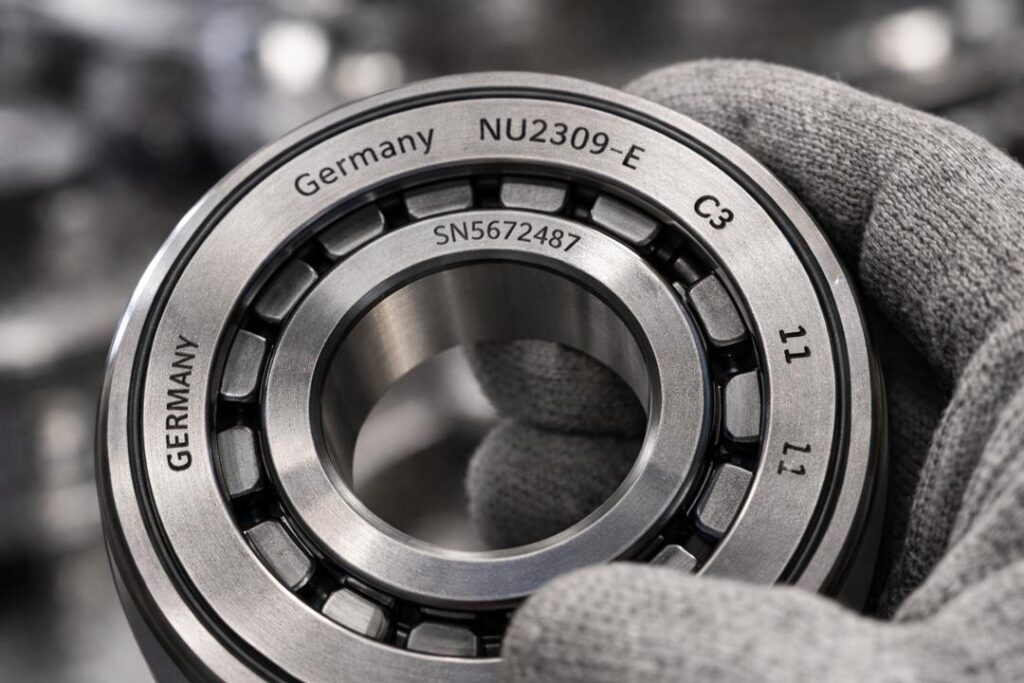
Beyond authenticity verification, bearing selection must consider load ratings, internal clearance, and operational conditions.
These factors are analyzed in our technical comparison of SKF and ZKL bearings for industrial use
A Structured Engineering-Grade Verification Approach
To eliminate uncertainty, we support industrial end-users and procurement teams through a Professional Inspection & Test Plan (ITP) specifically designed for SKF bearing authenticity verification and technical conformity prior to shipment.
All inspections are conducted inside officially approved OEM warehouses or logistics facilities, ensuring full chain-of-custody integrity and eliminating substitution risk.
Professional Inspection & Test Plan (ITP) for SKF Bearing Authentication
Our ITP provides a multi-layered verification process, removing risk from the purchasing decision and delivering documented proof of authenticity.
Key Verification Steps Included in Our ITP
The verification process typically includes:
Confirmation of SKF bearing model, dimensions, suffixes, internal clearance (e.g. C3), cage type, tolerance class, and design code
Verification of stamping, laser engravings, serial numbers, and batch references against SKF OEM standards
Packaging conformity audit including labels, holographic security elements, barcodes, carton references, pallet IDs, and sealing methods
Review and validation of Country of Origin (COO) and manufacturing plant traceability, with emphasis on European SKF production facilities
Cross-checking purchase orders, delivery notes, and packing lists for specification consistency
Dimensional and visual inspection to identify non-OEM machining or finishing defects
Random sampling for deeper inspection and compliance documentation
Full photographic and documentary evidence of the inspected shipment
Optional witnessing by a client-appointed representative
Guarantee of Authenticity Through Verified OEM Supply Chain Control
By performing verification exclusively within officially approved SKF supply chain facilities, we ensure:
genuine SKF bearing origin
factory-to-end-user traceability
verified manufacturing plant information
full compliance with SKF security coding systems
secure handling and export procedures
audit-ready inspection documentation
This approach provides confidence not only to procurement teams, but also to reliability engineering, maintenance, and compliance departments.
Why Counterfeit SKF Bearings Fail in Industrial Applications
Counterfeit SKF bearings commonly fail due to inferior materials and uncontrolled manufacturing processes. Typical failure modes include:
abnormal vibration and excessive noise
overheating and cage instability
premature fatigue and spalling
shaft scoring and housing deformation
unexpected shutdowns and safety hazards
loss of OEM warranty and liability coverage
These failures often occur well before planned maintenance intervals, increasing operational risk and total cost of ownership.

Beyond Visual Inspection: An Engineering & Compliance Mindset
SKF bearing verification must go beyond surface-level checks. Every bearing is treated as a critical technical asset, and our verification process aligns with:
SKF OEM technical standards
project and contractual specifications
end-user quality requirements
international QA/QC methodologies
This methodology is particularly valuable for:
OEM machine builders
reliability-critical industries
strategic spare-parts sourcing
high-value maintenance shutdown planning
Documentation, Traceability & Audit-Ready Verification
All inspections are fully documented. Clients receive:
structured ITP documentation
detailed inspection records
high-resolution photographic evidence
serial and batch traceability data
validated COO and production-origin details
shipment conformity reports
This creates a permanent and defensible audit trail essential for compliance, warranty protection, and internal governance.
Final Thoughts: How to Protect Your Operation from Counterfeit SKF Bearings
The industrial bearing supply chain must never rely on assumption or trust alone. SKF bearing authenticity must be proven, not presumed.
Conducting structured inspections under a professional ITP — inside officially recognized OEM warehouse environments — delivers the highest achievable level of certainty.
Our mission is simple:
to protect industrial operations from counterfeit risk and ensure that every SKF bearing entering your facility is genuine, compliant, and fully traceable.
For organizations seeking secure sourcing, independent verification, or OEM-aligned quality assurance, our engineering team delivers full transparencys transparency and industry-grade documentation — from inquiry to installation.
Pingback: Types of Bearings | Differences in the Global Market
Pingback: SKF KTL Coating Explained | Corrosion Protection for Bearings