Types of Bearings in the Global Market
Brands, Applications & Technical Differences
Introduction
Bearings are critical components in almost every industrial system. From electric motors and pumps to mining equipment and steel mills, the correct bearing selection directly impacts performance, reliability, and operational cost.
In this article, we provide a clear and practical overview of types of bearings available in the global market, their applications, and the most reputable bearing brands worldwide. This guide is designed for engineers, buyers, and international traders.
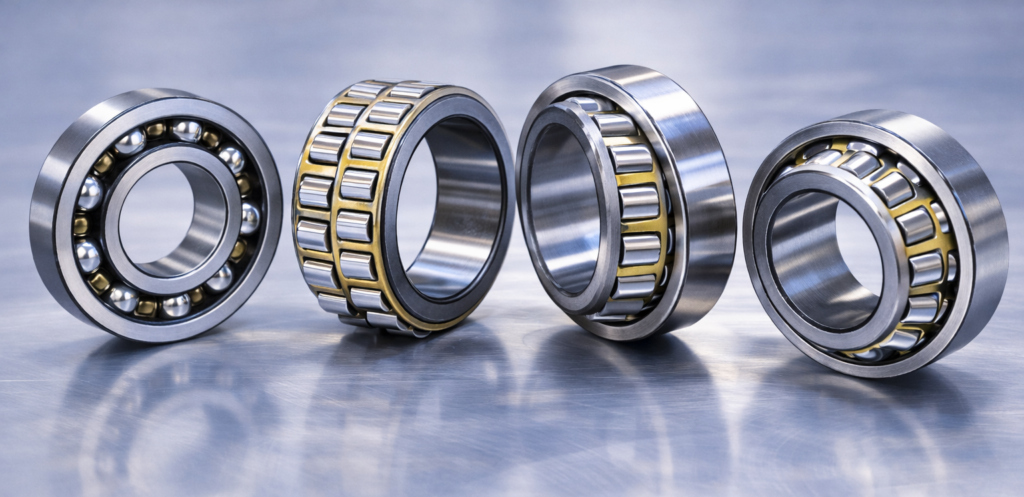
Main Types of Bearings in the Global Market
1. Ball Bearings
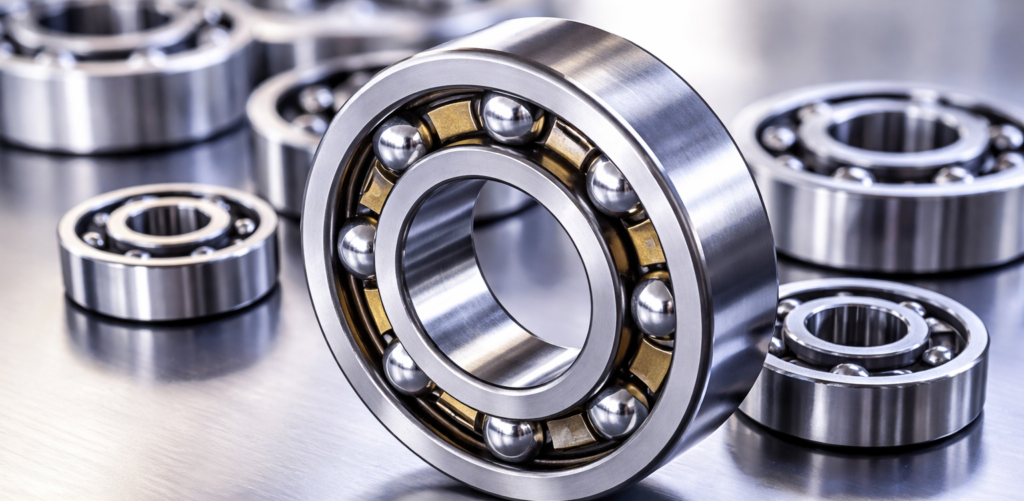
Ball bearings are the most widely used bearings worldwide. They are designed for high-speed applications and moderate loads.
Common Types:
Deep Groove Ball Bearings
Angular Contact Ball Bearings
Self-aligning Ball Bearings
Typical Applications:
Electric motors
Pumps and compressors
Automotive components
Household appliances
If authenticity is a concern, read our detailed guide:
2. Roller Bearings
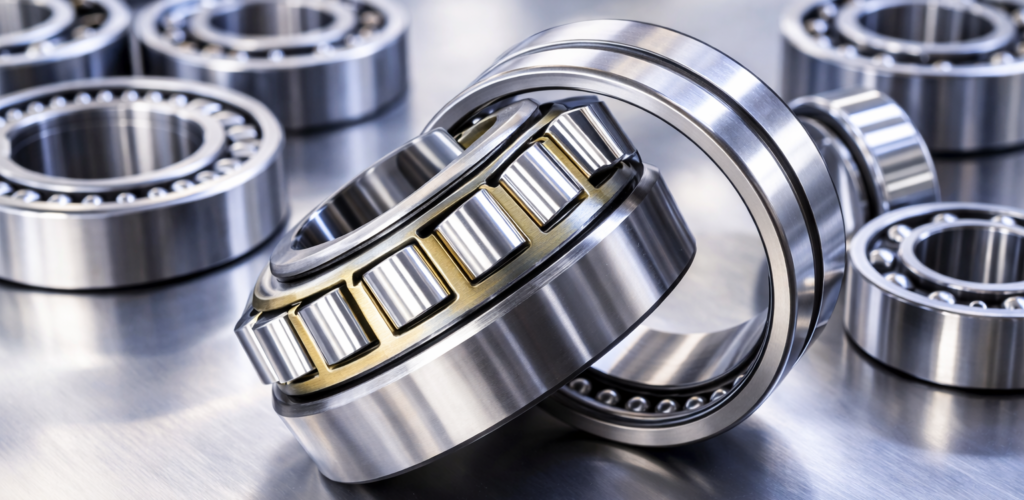
Roller bearings are built to handle heavier loads and demanding industrial environments.
Main Types:
Cylindrical Roller Bearings
Spherical Roller Bearings
Tapered Roller Bearings
Needle Roller Bearings
Typical Applications:
Gearboxes
Mining and construction equipment
Steel and cement industries
Heavy-duty conveyors
Major Bearing Brands in the International Market
SKF is considered the global benchmark for bearing quality. Known for precision, long service life, and extensive product range
ZKL specializes in heavy-duty bearings and is widely used in industrial and mining applications.
For a technical comparison, see our pillar article:
German engineering at its best. These brands are ideal for high-precision and critical industrial systems.
NSK, NTN, KOYO (Japan)
Japanese brands offer an excellent balance between quality, consistency, and cost, especially in automotive and general industry sectors.
Timken is a global leader in tapered roller bearings, widely used in heavy machinery and power transmission systems.
European vs Japanese vs Chinese Bearings
| Origin | Key Characteristics | Best Use Case |
|---|---|---|
| European | High precision, long lifespan | Critical industrial applications |
| Chinese | Low cost, variable quality | Non-critical or short-term use |
| Japanese | Stable quality, competitive pricing | Automotive & general industry |
- Note: Quality control and supplier verification are essential when sourcing low-cost bearings.
Featured Snippet Comparison Table
Comparison of Common Bearing Types
| Bearing Type | Load Capacity | Speed Capability | Main Application | Example Brands |
|---|---|---|---|---|
| Deep Groove Ball Bearing | Medium | High | Motors, pumps | SKF, NSK |
| Angular Contact Ball Bearing | Combined | High | Precision machinery | FAG, NTN |
| Cylindrical Roller Bearing | High | Medium | Industrial gearboxes | ZKL, SKF |
| Spherical Roller Bearing | Very High | Low | Mining, steel plants | Timken, SKF |
| Tapered Roller Bearing | Radial + Axial | Medium | Automotive, heavy-duty | Timken, KOYO |
How to Choose the Right Bearing
When selecting a bearing for international or industrial use, always consider:
Load type (radial, axial, combined)
Operating speed
Environmental conditions (dust, moisture, temperature)
Brand authenticity
Supply chain reliability and availability
Conclusion
The global bearing market is not just about price—it is about performance, reliability, and authenticity. Understanding bearing types and brand strengths helps reduce operational risk and ensures long-term efficiency.
Straight Opinion
High-precision or critical systems → SKF, FAG
Heavy-load industrial use → ZKL, Timken
Cost-effective mass usage → Japanese brands