What Is SKF KTL Coating?
Advantages, Applications & Differences Explained
Introduction
In industrial environments where moisture, chemicals, and corrosion are constant threats, surface protection plays a critical role in bearing performance and lifespan. One term that frequently appears in technical datasheets and search results is SKF KTL.
But what exactly does KTL mean? Is it a bearing type, a material, or just a coating?
In this article, we explain SKF KTL coating in detail, including how it works, where it is used, and why it matters in real industrial applications.
What Does KTL Mean in SKF Bearings?
KTL stands for Kathodische Tauchlackierung, also known as Cathodic Dip Coating.
It is an electrochemical coating process used to apply a uniform, corrosion-resistant paint layer to metal surfaces.
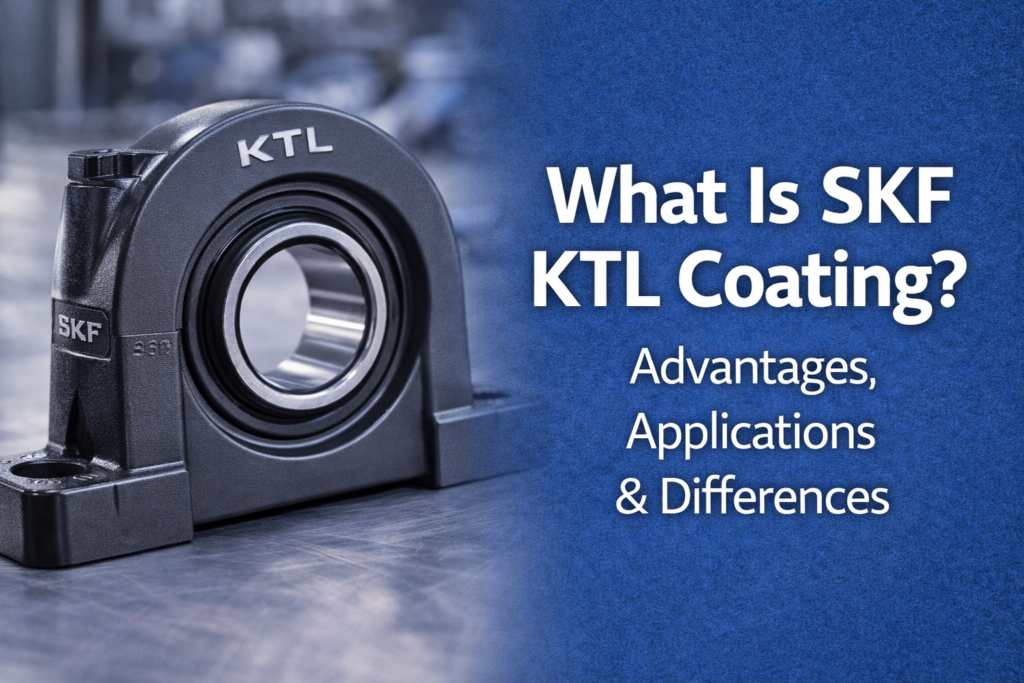
When used by SKF, KTL coating is mainly applied to:
Bearing housings
Insert bearings
Bearing units
External metal surfaces exposed to harsh environments
⚠️ Important:
KTL is NOT a bearing type, model, or series.
It is a surface protection feature.
How Does SKF KTL Coating Work?
The KTL process involves:
Submerging the metal component in a water-based paint bath
Applying an electric current
Causing the coating to bond evenly to the surface
Heat-curing the coating for durability
Key Technical Characteristics
Uniform thickness (even on complex shapes)
Excellent adhesion
Strong corrosion resistance
Environmentally friendly process
Why Does SKF Use KTL Coating?
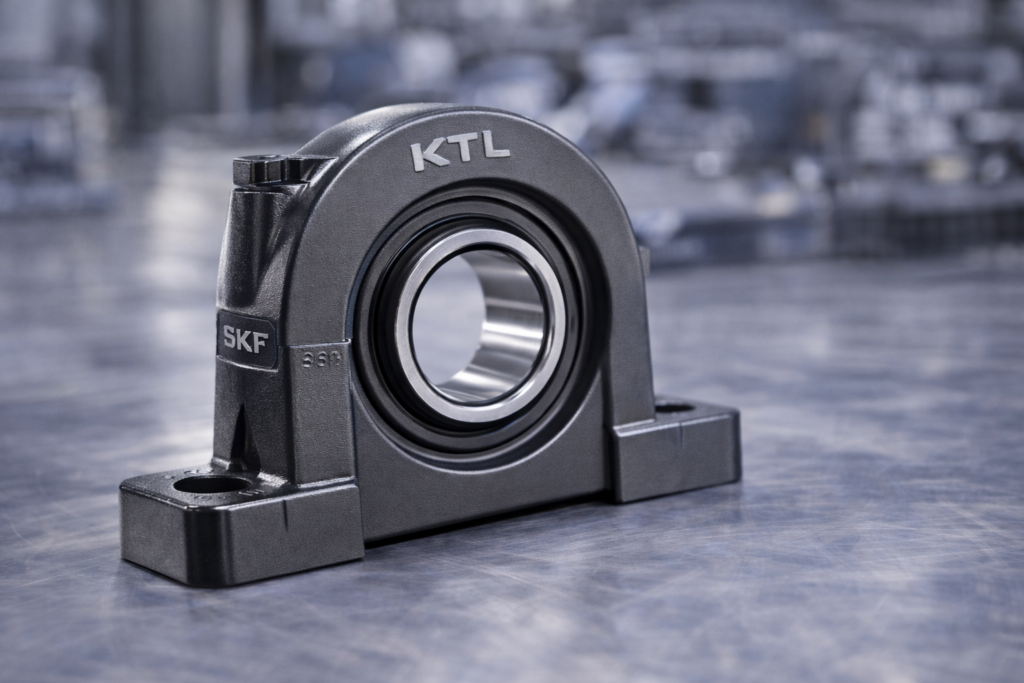
SKF uses KTL coating to extend product lifespan in environments where standard steel surfaces would corrode quickly.
Main Advantages of SKF KTL Coating
✔ High resistance to humidity and salt
✔ Protection against chemicals and mild acids
✔ Smooth, non-flaking surface
✔ Better durability than traditional paint
✔ Minimal impact on bearing dimensions
Typical Applications of SKF KTL Bearings
SKF KTL-coated products are commonly used in:
Food & beverage processing plants
Agriculture machinery
Marine and coastal installations
Conveyor systems
Outdoor industrial equipment
Humid or washdown environments
These environments demand corrosion protection without compromising precision.
SKF KTL vs Zinc Coating vs Standard Paint
Comparison Table
| Feature | KTL Coating | Zinc Coating | Standard Paint |
|---|---|---|---|
| Corrosion Resistance | High | Medium | Low |
| Thickness Uniformity | Excellent | Medium | Poor |
| Adhesion | Very strong | Medium | Weak |
| Industrial Durability | High | Medium | Low |
| Environmental Impact | Low | Medium | High |
📌 Conclusion:
KTL coating offers the best balance between protection, durability, and dimensional stability.
Is KTL Suitable for All Bearings?
No. KTL coating is typically applied to external surfaces.
It does not replace:
Stainless steel bearings
Special internal coatings
Lubrication systems
For internal rolling elements, SKF relies on material quality and lubrication, not surface paint.
SKF KTL and Bearing Authenticity
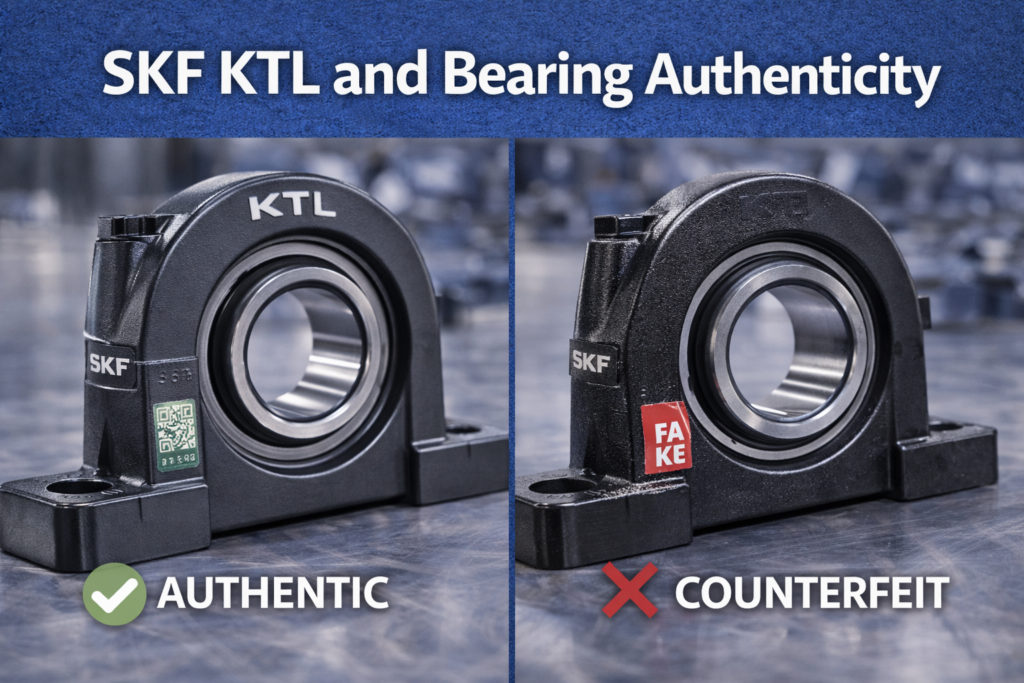
Because “SKF KTL” is a popular search term, it is sometimes misused by sellers.
If authenticity matters (and it always should), read:
KTL marking alone does not guarantee authenticity.
How KTL Fits into Bearing Selection
- When selecting bearings for international or industrial projects, KTL coating is a decision factor, not a deciding factor.
You should always consider:
Load type
Speed
Operating temperature
Environmental exposure
Brand authenticity
For a broader understanding, see:
Expert Opinion (Straight Talk)
Humid or outdoor environment → KTL makes sense
Heavy chemical exposure → Stainless or sealed solutions
Dry indoor use → KTL not necessary
KTL is smart protection, not marketing decoration.
FAQ
What is SKF KTL coating?
SKF KTL coating is a cathodic dip coating used to protect bearing housings and units against corrosion.
Is SKF KTL a bearing model?
No. KTL is a surface coating, not a bearing type or series.
Does KTL coating affect bearing performance?
No. It protects external surfaces without impacting bearing precision or load capacity.
Can fake bearings have KTL coating?
Yes. Some counterfeit products imitate KTL appearance. Always verify authenticity.